

Inside Post Ranch Inn's Chef's Garden
In our latest "Field Trip" Garden Tour: Saffron containers, murder podcasts and only growing what belongs on one of Big Sur's prettiest, most productive plots of land.

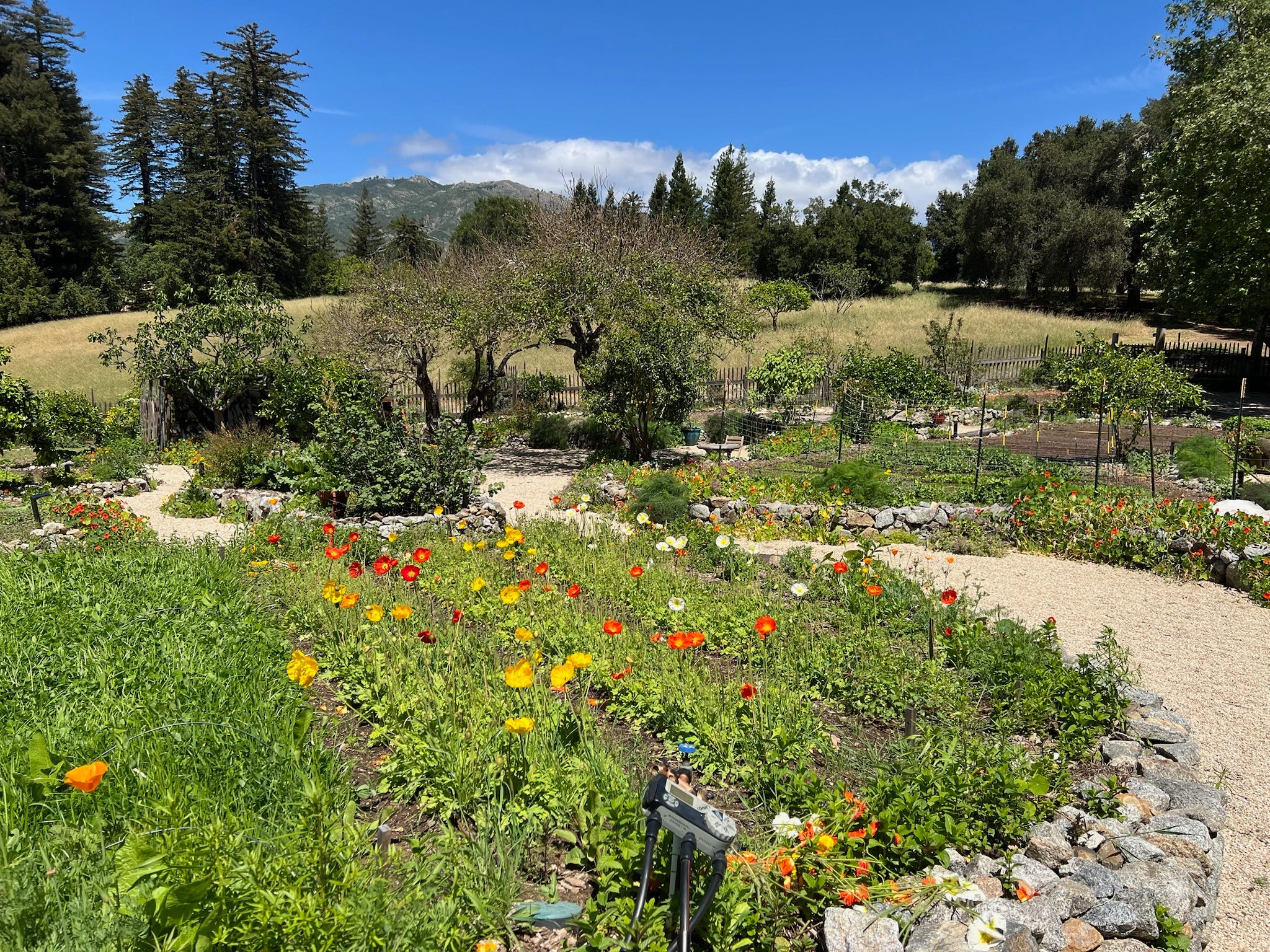
Welcome to this installment of Field Trip, our series that goes inside gardens and farms across the globe and spotlights the interesting people who keep them alive. Today we’re talking to Reylon Agustin, the Culinary Director of Big Sur’s Post Ranch Inn, and his culinary gardening specialist Julia Yamasaki, about the insanely gorgeous regenerative chef’s garden they run on the hotel’s property — and borrowing wisdom and inspo for our own gardens at home.

In August 2008, when I was a cub reporter at the L.A.Times Image section writing about all manner of fashion and shopping, I came across the news that Barney’s Creative Director Simon Doonan and whimsical Hollywood Regency interiors king Jonathan Adler were eloping. Since this was the height of the Prop 8 discourse that ultimately overturned same sex marriage in California a mere three months later, the story of this very stylish couple’s nuptials felt deserving of a spot in the country’s second largest newspaper.
When I interviewed Doonan and Adler for the piece, I was completely taken by the intimacy of their plans, with only Adler’s mother and sister invited to the festivities. They also told me about their elopement location of choice — Post Ranch Inn, the famed Big Sur hotel nestled between rugged Pacific cliffs and groves of ancient Redwood trees. New to California, I wasn’t yet familiar with Big Sur. So I visited the property’s website and lost my shit at the sight of its modern architecture melting into Big Sur’s untamed surrounds. But my true big-eyed moment was seeing Post Ranch’s glass-walled restaurant that — even via the low-res imagery of an early 2000s webpage — appeared to float ethereally over the ocean. The slot atop my lodging bucket list had a new occupant. And my wedding fantasies were officially formed.
In 2023, when it was time to actually plan my own wedding, I remembered my Post Ranch dreams well. Bradley and I had already made Big Sur one of “our places” (we always stay in far more modest, yet beloved digs down the road). So when we decided to hold our ceremony in the redwood grove of a circa 1948 community center with only our immediate families in tow, we felt like Post Ranch Inn’s Sierra Mar restaurant — with its instantly recognizable glass jutting out over the roiling Pacific below — would be the perfect place for our own cozy, once-in-a-lifetime reception dinner (it really, really, really was).
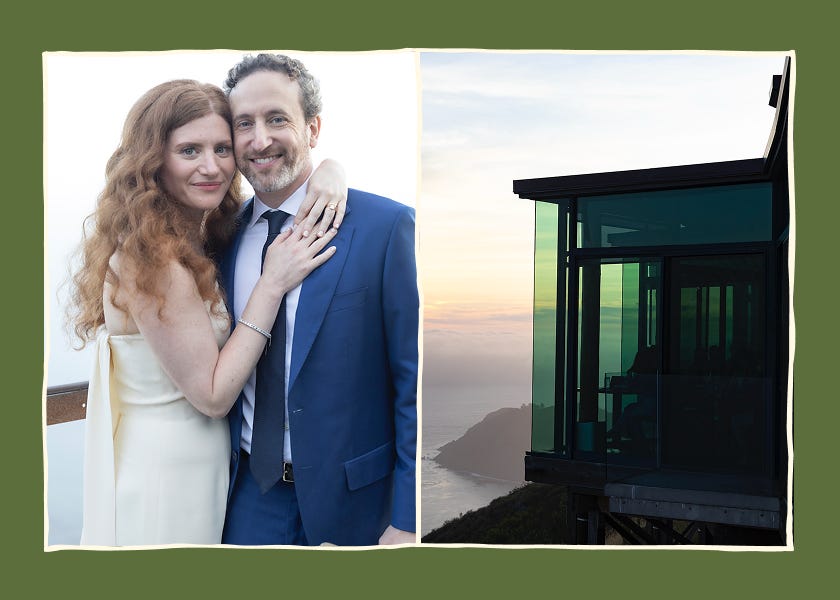
When we drove up to Big Sur for a long weekend in mid-April of this year (our first time back since our wedding weekend), I wanted to return to Post Ranch for some landscaping inspiration (and perhaps some lunch). So I reached out to culinary director Reylon Agustin, who had helped make our reception meal happen, to see if he’d be willing to show me around his magical chef’s garden — an utterly transportive parcel of land where many of the items on Sierra Mar’s menu originate.
Agustin’s stint at Post Ranch began nearly six years ago, when the Central California-born chef took over the hotel’s culinary and farming programs after helming the kitchen (and earning a Michelin star) at Madera, the flagship fine dining restaurant at Menlo Park’s Rosewood at Sand Hill. Agustin is passionate about bringing regenerative farming practices to his kitchens and menus, working with organizations such as Regenerative California as well as local farmers and suppliers who focus on organic methods and soil health.
“I had never been part of a program where we had our own farm and are able to dictate and grow things. But that’s where, as a chef, you go back to school in a sense,” he told me as we strolled past the garden’s blooming nasturtiums while redwoods loomed in the distance. “Since I’ve been down here, [the garden] really has influenced a lot of the way that I’ve cooked.”
He runs the Three Michelin Key property’s farming program with the help of Julia Yamasaki, Post Ranch’s edible landscape specialist who helps with overall land strategy and manages the bucolic plot day-to-day.
Spending an hour traversing the garden gave me an entirely novel, more nuanced understanding of what “farm to table” really means. It isn’t simply about growing fresh produce, but rather a much deeper connection to the specific climate, soil and conditions of a particular place. And how, when you grow the right crops, you allow a healthy, productive ecosystem to take root on the land for years to come.
The interview below (condensed and edited for clarity) comes from the hour plus we spent touring the garden with Agustin and Yamasaki, just before Bradley and I shared some perfect Sierra Mar french fries and shrimp cocktail while looking through the same glass wall at the ocean view we shared on our wedding night.

You got to Post Ranch during the pandemic. I imagine the garden space must have been really different when you got here.
Reylon Agustin: It was a ton of flowers — they were just growing a lot of flowers for the rooms. And I was like, okay, help me understand what this was before this current iteration. They used to grow a couple things. But the [Post Ranch Inn was] in between chefs. So Chris, who was the former farmer, was like, you know, what would you like to grow? And my question was, well, what can you grow?
That seems like a really rational first question to ask when planning a chef’s garden — what will the climate support, especially a climate like Big Sur that’s windy, cool, rainy and perfectly sunny all in one. What was the answer?
R.A.: We started the first year with heirloom tomatoes and…crash and burn. It’s not hot enough here. So, like, alright, let’s try to go to Early Girls, because I was thinking [about] Santa Cruz and [how] that climate has to be somewhat similar. Our Early Girls were like, ugh, crash and burn. So then we get onto Sun Golds. And, okay, those work well here. So it was a bunch of failure — we tried this and this didn’t work. We tried that and that didn’t work. Things like lettuces — short crops — Salanova, you know, things like that. [Mustard greens] will grow, no problem. But anything that requires substantial heat waves, we just don’t get [heat waves] long enough for good yield or maturation.
Julia Yamasaki: Especially to keep on a menu is really difficult. Last year, our hottest day during the summer was 75 [degrees]. And we still had nighttime temperatures hitting 45 at that same time. So even our Sun Gold tomatoes didn’t come in until September, and then they only ran for about three weeks, which is not enough to keep on a menu.
(Beginners note: Sun Golds have already started ripening in Ojai’s spring heat).
So much must go into the calculation of “what should I grow?” How do you answer that question as a home gardener who likes to cook?
J.Y.: I always tell people, if it’s your own farm garden, start with things you actually like and things you want to cook with, which usually are herbs and flowers. Like, you’re not gonna get a bouquet every single day. But I run out [to get] cilantro the most at the grocery store. So I pretty much only grow herbs in my backyard. I remember to water them, because that’s the biggest thing — people need to get used to watering things every day or every other day. [Forgetting to water] is usually how a garden fails. And then, [thinking of] things you actually want to eat. Like, if you don’t like tomatoes, why are you growing them?


This sounds easy enough to do with herb containers for a few home-cooked dinners per week. But how does this process of crop planning change when you’re running a farm designed to power the menu of an acclaimed destination restaurant?
J.Y.: From a production stance, we’ve done a really good job of saying, okay chefs, what do you want? And they kind of give me their dream list. And with my experience, I can pare down what will work. Then we go through volumes, and I can do the backwards calculation of how much I need to grow any given week. Then I come to them — because there’s an opposite side of the spectrum where I’m seeing new seed breeders come in and new types of importation. I’ve been working with [Blue Hill chef Dan Barber’s] Row 7 on some trials we’re gonna do here. The Palestinian Seed Savers Co. has sent me some seeds. So I see different sides of vegetables that come up and then come into culinary fashion as well. So I [go to the chefs] and say, we have this space left over. What do you guys want to try? What sounds interesting?
So chef, what sounds interesting? What are you most excited to try to grow this year?
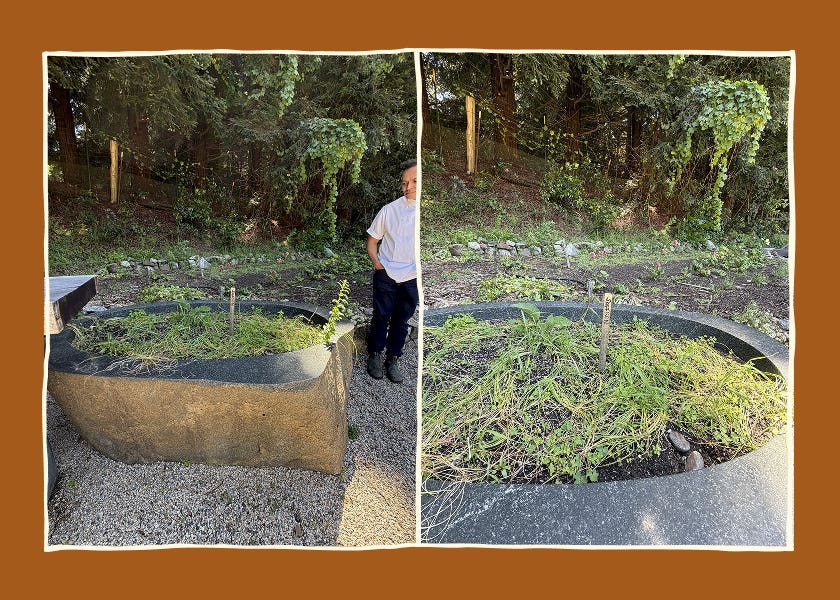
R.A.: Oh, I mean, looking at that saffron…this is [Julia] indulging me, because I saw it growing over where that tub of fennel is. I was walking by and I just saw a purple flower inside of it. And I was like, wait what is this? And [I] see the two saffron threads coming out of it. And that’s the first time in my life, as a chef, I’d ever seen live saffron, not being dried and inside of a bag. And so I told [Julia] about it.
J.Y.: I was like, do you want 150 more?
R.A.: So if that can come to fruition, yeah, those things are fun for me. You know, it’s not that we’re necessarily trying to be a plant based restaurant — we’re just produce-forward. But to me, if that saffron comes to bloom and we actually can pull the stems out of it, that is the show. How do I, maybe, potentially, bloom that in front of the guest inside of a broth or something table side? Chanterelles grow on property, we get Porcinis on property, or Boletes and that’s the show, you know? People are like, oh you got Chanterelles. What are you gonna cook it with? Like, what do you mean? Are you gonna serve it with chicken or fish? But why? That is the show. That’s the centerpiece, right? Why put it into the background?
I really appreciate Julia’s hard work and her insight and relentlessness in figuring [everything] out. It’s a big puzzle and you don’t have all the pieces, because Mother Nature has those last few pieces. That equation [of] trying to figure [how things will grow] every year. No two years are the same. And the yields are always different. What comes to fruition is different. The same things that do come to yield might taste different based on the heat, based on the cold, and you as a chef have to work with that. But yeah, I think the thing I’m most excited about that I’m crossing my fingers about is the saffron.
I imagine you’ve cooked with saffron a ton in your career. It’s so interesting to think about how you’ve never actually seen it growing before.
R.A.: Cooks who have never been on a farm before seeing things in the ground don’t know what arugula looks like. Don’t know what mustard looks like. They don’t know it, because it doesn’t say it on the side of a box. And so that exposure, even for the culinary team, is important for them to understand. As a chef I have seen and participated in animal slaughter just to understand the process. And it’s really eye opening. It’s a crazy moment, it’s a heavy moment. Like, the first couple of times, first few times, and even every successive time after that, it’s not gotten easier. You feel this obligation to use the entirety of the animal, because you’re like, I just took this life. It’s the same thing when it comes to farming — the things that are in the ground, and that (hopefully) connection of the guest understanding what it takes.
I notice the saffron is growing in a container. Why plant that way as opposed to the ground? Is one better than the other?
J.Y.: I personally prefer the ground. And I’ll just say this, like, I hate potting soil. I hate having to buy it. I hate having to use it, I hate how it’s harvested. I would much rather plant in the ground, deal with the gophers, deal with the shitty soil, for lack of a better term, then have to buy, sling and fill a raised bed container. I try and do things in containers that are absolutely obnoxiously wild.
R.A.: Like mint!
J.Y.: Exactly. I’m trying to do [the saffron] in containers just because I can keep the temperature a lot cooler in a container than in the ground. When we grow salt water succulents, I’ll do them in containers. Then I can actually water them with salt water. I do specialty things in containers. Other than that, I’m like, let’s rock the ground. The plants actually do a lot better.
Ok so we’re all pulling for this saffron (and I fully intend to come back for that table side show situation you mentioned). But what happens when you experience the opposite and have way too much of a particular crop?
R.A.: When things come on aggressively, for example, like when the apple trees yield a lot of apples, and you’re like, what am I doing with 150 pounds of apple? The first year that I got here [I said] let’s make an apple cobbler. So we did an apple cobbler. And turned [other apples] into apple butter. And then another year, we turned it into, kind of like a compote — like a jam — and gifted it to people as they were coming in or leaving the property. Different takeaways and things like that. Anytime something comes on like a mass rather than a schedule where there’s a consistent yield — that’s when you start to get into larder preservation techniques. And then you just want to make sure that you find a home for it eventually, right? Because with a larder program, it’s always difficult because what people are looking for is seasonality. So when you try to incorporate things that are preserved, dried, brought down to powders or salts or whatever, it might not go well on the dish you’re putting it on for the sake of trying to use it. Or people might comment like, why do you guys have this on the menu right now?


I’m jealous thinking about your over-yield of crops, considering I can’t manage to keep squirrels from destroying all of my parsley, dill and cilantro. You’re so committed to soil health and the health of the ecosystem here and you don’t spray. How do you deal with pests on a production-minded farm like this that fully supports organic growing methods?
J.Y.: Every farm I’ve ever worked at has a water source. During the summer, your birds get really thirsty, and they eat your crops. By providing them water, they actually stay off your crops, so you’re using less bird netting, which has a lot of bird death associated. And then they go back to their primary function of eating bugs on your plants. So it’s a little bit of pest control for me, as well as having an elongated water source like [we do here], as opposed to a bird pool, allows bats to come in at night. Which eat your moths — which are a lot of those nasty caterpillars that go through cabbages and brassicas and things like that. So for me, it’s a form of pest control in two ways, of like not having to keep my crops covered, and then also not having to spray.
There’s [a quail] over there, literally staring at me from the rhubarb patch and probably won’t move until we walk right next to him.
R.A.: Because he’s looking out for all the other ones. The other ones are probably feeding in the bed. He’s the lookout.
J.Y.: They’re so adorable, and my ethos is always to let nature come into your garden instead of trying to exclude it, because once it reaches balance, you’re not fighting against the problem anymore, it’s created its own system. But they definitely love my tender little peas.
Big Sur is one of my favorite places on the planet. The somewhat harsh microclimates and the rugged landscape and the close-knit community is so unique. This place truly feels different from anywhere else in California. How does simply being here in Big Sur inspire what you grow and cook?
R.A.: Since I’ve been down here, it really has influenced a lot of the way I’ve cooked, just because, going hiking in Big Sur — you’re talking about the nasturtiums and the fennel, the monkey flower, and Bay laurel, and all those things that that exist out there. Miner’s lettuce. As you’re walking the earth, you see all these things that are happening naturally. Or you see wood sorrel, things like that. I’ve always had a really good relationship with the farmers that I work with. But here, I need to have a different approach in terms of just rattling off a bunch of things that we can grow. But should we?
Julia has done such a good job of [figuring out what we can and should grow]. And us both thinking in that mindset of what is native and how we support that. [The] symbiosis between [what works with the land] and things that we do want to grow becomes the starting point for what we put on the menu. Especially with the bar program. All of our signature cocktails — it’s kind of mandatory that we use a local ingredient. So I love that. Even if the garden is dormant, we’re still using herbs.
We work with the Bitter Ginger, who’s basically here in Big Sur — his first job was at Sierra Mar as a bartender, and that’s what inspired him. Carlo from Big Sur Sea Salts. We get our honey from Big Sur. On Apple Pie Ridge [in Big Sur], they have pineapple guavas. So we have pineapple guavas. Whenever we can, or however we can continue to close the radius in terms of all resources is kind of part of what we do.


Julia, you’re out here managing this land every day. What does a typical day look like for you?
J.Y.: It’s kind of nice working by myself sometimes, because I just get to listen to all my farming podcasts and all my murder podcasts and my audiobooks. And then it’s me talking to the chickens, and I decide what I need to do that day. I’ll do a morning walk pretty much every morning after I feed the chickens and notice what changed overnight and what moves into the immediate “needs to get done” track and go from there.
Dream office.
R.A.: I just feel fortunate to be here. Yes, I’m hired to do a job. I work here, and I make a paycheck and all the things. But when I think about my journey as a chef, or as a culinarian, never in my wildest dreams did I think I’d be standing in a restaurant like [Sierra Mar] and be a part of a place that has something like this. Like, how does it get any better?
When I was at Rosewood, we’d achieved, you know, a Michelin star. We were doing like, $30 million in food and beverage a year. [It was] just such a great success story. It was the flagship of the Rosewood group. And you’re like, where do you go from here, right? And then the pandemic comes and you’re like, what do I want to do? So being here is, it’s busy — it’s no less busy — but it’s busy in a different way. And it also gives opportunities for moments like this. Whereas at Rosewood, I could spend ten minutes with you [and then have to leave you with someone else]. And that was just my life. I was just on a bullet train every day. And now I get to see a lot of the returning guests that come back here. I get to spend time with them and connect with them. So it’s a good gig.
Share this post with someone who loves plants. You know you want to. 🌱